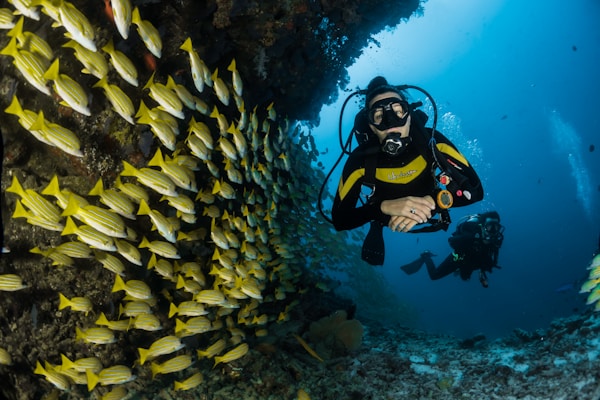
Scuba Diving and Freediving in Lake Atitlán: Exploring Guatemala's Underwater World
Scuba Diving and Freediving in Lake Atitlán: Exploring Guatemala’s Underwater World
Lake Atitlán’s underwater environment is one of Guatemala’s least explored ecosystems. Most visitors know the lake for its volcanoes and villages, but descend beneath the surface and you enter a world of submerged calderas, volcanic formations, and freshwater fish species found nowhere else on Earth. Scuba diving and freediving here appeal to experienced divers seeking adventure in lesser-known waters and to curious beginners wanting to explore this unique environment.
Diving Lake Atitlán is technically challenging—high altitude, cold water, limited visibility some seasons—but these challenges make the experience more rewarding. You’re not diving a Caribbean resort destination. You’re exploring genuinely remote underwater terrain.
The Underwater Landscape
Lake Atitlán’s underwater geography is dramatic and unusual. The lake basin is a collapsed volcanic caldera, meaning the underwater topography reflects the same volcanic drama as the landscape above. Underwater cliffs drop from shallower areas into deeper basins. Submerged rock formations create labyrinths. The lake’s thermal signature (fed by geothermal springs) creates unique microhabitats.
The water is coldest November through March (around 60°F / 15°C), requiring wetsuits or drysuits. April through October it warms to 70°F / 21°C, allowing lighter exposure protection. Visibility ranges from 20-40 feet in dry season to sometimes as little as 10-15 feet during rainy season. The best diving windows are December through March and July through August.
Fish species include freshwater cichlids found nowhere else, catfish, and occasionally larger fish species that have adapted to the lake’s specific conditions. You won’t see the tropical diversity of ocean diving, but the endemic species and the geological formations create a unique diving experience.
Scuba Diving in Lake Atitlán
Dive Operators and Certification
Only one dive operator currently serves Lake Atitlán regularly: Scuba Atitlán, based in Panajachel. They’re PADI-certified and operate year-round, though some sites close during rainy season due to poor visibility.
Scuba Atitlán offers:
- Certification courses: Open Water certification (3-4 days, Q1,800-2,200 / $225-275 USD) takes you from non-diver to certified recreational diver
- Guided dives: Experienced divers can book dives to specific sites (Q300-400 / $37-50 USD per dive plus transportation)
- Advanced courses: Enriched air, deep diving, and specialty certifications available
- Equipment rental: Masks, regulators, tanks, and wetsuits available if you don’t have your own
Getting to Dive Sites
From San Marcos, you’ll need to arrange transportation to Panajachel (30-45 minutes by boat), then travel by boat to dive sites. Alternatively, request Scuba Atitlán to meet you at San Marcos with a speedboat and guide. This costs more but saves travel time. Sarnai can arrange these logistics.
Popular Dive Sites
San Pedro Bay Underwater Formations: The clearest water and most dramatic underwater landscape. Submerged cliffs and rock formations at 40-70 feet depth. Good for experienced divers; intermediate divers can stay shallower.
Pájaro Point: Named for the bird-shaped rock formation, this site offers good visibility and moderate depth. Known for endemic fish species and smaller formations suitable for intermediate divers.
Santiago Bay Thermal Vents: The only true thermal vent diving in Guatemala. Experiencing warm water rising through cold ambient water is surreal. Limited visibility sometimes, but the geological uniqueness is worthwhile.
Cerro de Oro Site: A deeper site suitable for advanced divers, with interesting submerged volcanic formations and strong thermoclines (transitions between water temperature layers).
Jaibalito Wall: A dramatic underwater cliff creating a wall diving experience. Good visibility typically; suitable for intermediate to advanced divers.
Freediving and Breathhold Diving
Freediving—diving on a single breath without equipment—offers an intimate experience of the lake unavailable through scuba. You have less time underwater, but the simplicity and connection are extraordinary.
Finding Freediving Instruction
No formal freediving schools operate at Lake Atitlán currently, but individual instructors sometimes offer courses. Ask at Sarnai about current instructors. If you’re already certified in freediving, you can dive independently with proper safety protocols (never alone, properly weighted).
Self-Directed Freediving
Many visitors explore the lake through snorkeling, which is safe and accessible. Snorkeling requires minimal equipment (mask, fins, snorkel) and allows you to see underwater formations and fish without the cost and complexity of scuba certification.
Popular snorkeling spots:
- San Marcos shoreline: Shallow water, fish species visible, safe and accessible
- Jaibalito water: Clear water during dry season; boat transportation required
- Santiago Bay shallows: Accessible from Santiago Atitlán
Snorkeling safety guidelines:
- Always wear a life jacket if you’re not a strong swimmer
- Never snorkel alone
- Check weather conditions before entering water
- Be aware of boat traffic
- Respect the lake—don’t touch or damage formations
The Experience of Diving at Altitude
Altitude diving is technically different from sea-level diving. At 5,125 feet elevation, atmospheric pressure is reduced, meaning nitrogen loading and decompression profiles differ slightly. This is why Scuba Atitlán uses special dive tables and why diving to significant depths becomes more challenging.
For recreational divers, altitude doesn’t dramatically change the experience—you’re still following standard safety protocols. But be aware that your body processes nitrogen differently at altitude. After diving, you can’t immediately fly to sea level. Most dive operators recommend 12-24 hours at altitude after diving before flying.
Physical and Psychological Preparation
Scuba diving requires physical fitness and psychological comfort in challenging environments. Lake Atitlán’s cold water, limited visibility some seasons, and depth present real challenges.
Fitness: You should be comfortable swimming, able to equalize pressure in your ears, and in adequate cardiovascular health. Full medical clearance is required before certification.
Psychology: Comfortable being underwater, managing claustrophobia if present, and handling limited visibility are essential. Panic underwater is dangerous. Proper training includes managing stress and emergency scenarios.
Previous diving experience: Open Water certification assumes no previous diving. If you’re already certified, your experience elsewhere applies. Refresher courses are available if you’ve not dived in years.
Cost and Duration
A scuba diving experience at Lake Atitlán breaks down as follows:
Certification courses: Q1,800-2,200 ($225-275 USD) for Open Water certification (3-4 days)
Guided dives: Q300-400 ($37-50 USD) per dive, plus transportation to Panajachel (Q30-50 / $4-6 USD) and potentially speedboat to dive sites (Q200-300 / $25-37 USD additional)
Equipment rental: Q100-200 ($12-25 USD) per day
Snorkeling: Free if you have your own gear; equipment rental Q50-100 ($6-12 USD) per day
A certification course plus two guided dives costs roughly $450-550 total. A snorkeling day costs nothing to minimal cost.

The Underwater Experience
Diving Lake Atitlán uniquely combines geological drama with solitude. Unlike popular diving destinations, you might be the only diver in a given area. The fish are curious rather than fearful—endemic species haven’t evolved to see humans regularly. The water temperature creates a sensory intensity different from tropical diving.
Many divers describe the experience as meditative. The focus required, the rhythm of breathing, the slow movement through three-dimensional space—diving occupies your mind completely. Problems and worries fade.
The landscape beneath the surface tells the geological story above—volcanic formations, thermal activity, the ongoing geological processes that shaped Lake Atitlán. You’re diving inside a volcano’s history.
Integration with Other Lake Atitlán Activities
Diving integrates well with other lake activities:
Yoga after diving: Many divers do gentle yoga in the evening, stretching muscles used during diving and processing the experience through movement.
Meditation: The altered consciousness of diving sometimes deepens meditation practice.
Hiking volcano rims: You see volcanoes from above, explore them on foot, and if diving, experience their underwater dimensions.
Spiritual exploration: Many indigenous traditions view water as sacred. Entering the water with respect honors these traditions.
Environmental Considerations
Lake Atitlán’s underwater environment is fragile. Follow these principles:
No-touch diving: Look, photograph (if you have underwater camera), but don’t touch formations or creatures.
Respect fish: Don’t feed fish or attempt to interact with them beyond observation.
Proper buoyancy: Avoid kicking up sediment or damaging coral-like formations.
Support the ecosystem: Dive operators who follow conservation principles deserve your patronage.
Leave no trace: Remove any trash you encounter; don’t add to the lake.
Scuba Atitlán maintains conservation practices and educates divers about protecting the underwater environment.
Frequently Asked Questions
Q: I’m not certified to dive. Can I still explore the underwater Lake Atitlán?
A: Absolutely. Snorkeling requires no certification and allows meaningful exploration. You’ll see fish, formations, and the underwater landscape, though you can’t descend as deep or stay as long as scuba divers.
Q: How cold is the water, and will I be comfortable?
A: November through March, water temperature is 55-60°F (13-15°C)—cold enough that you’ll need a 5-7mm wetsuit or drysuit. April through October, temperatures reach 68-72°F (20-22°C), requiring only a 3mm wetsuit. Cold water is refreshing; you adjust quickly.
Q: Is Lake Atitlán diving safe?
A: Diving carries inherent risk anywhere. Lake Atitlán’s specific challenges (altitude, cold, visibility variation) are manageable with proper training and adherence to safety protocols. Scuba Atitlán maintains safety standards. Choose certified operators and follow their guidance.
Q: Can I dive while staying at Sarnai?
A: Yes. Sarnai can arrange transportation to dive operators in Panajachel. Most divers spend the day on the water and return to Sarnai in the evening. The peaceful environment is perfect for resting after diving.
Lake Atitlán’s underwater world rivals its volcanoes in beauty and drama. Whether you dive deep or snorkel the shallows, the water invites exploration and wonder. Begin your aquatic journey at Sarnai, your tranquil basecamp for discovering Guatemala’s hidden underwater realm.
