Wifi & Internet in San Marcos La Laguna: A Nomad's Reality Check
Wifi & Internet in San Marcos La Laguna: A Nomad’s Reality Check
Internet in San Marcos La Laguna has improved dramatically, with fiber connections now available at dedicated coworking spaces and quality accommodations, making full-time remote work genuinely feasible, but speeds still vary, so a mobile-data backup is essential. Here’s the honest picture for digital nomads.
Connectivity is the make-or-break factor for remote work. Here’s what to really expect from the internet at the lake, and how to stay reliably online.
The Current State of Internet
A few years ago, working from San Marcos meant gambling on patchy wifi. Today, fiber-optic internet has reached the village, and well-equipped coworking spaces and accommodations offer connections fast enough for video calls, large uploads, and full workdays. That said, the lake is still a remote highland village, so speeds and reliability vary by location, and occasional outages happen. The key is choosing the right base and having a backup.
Choose Your Workspace Carefully
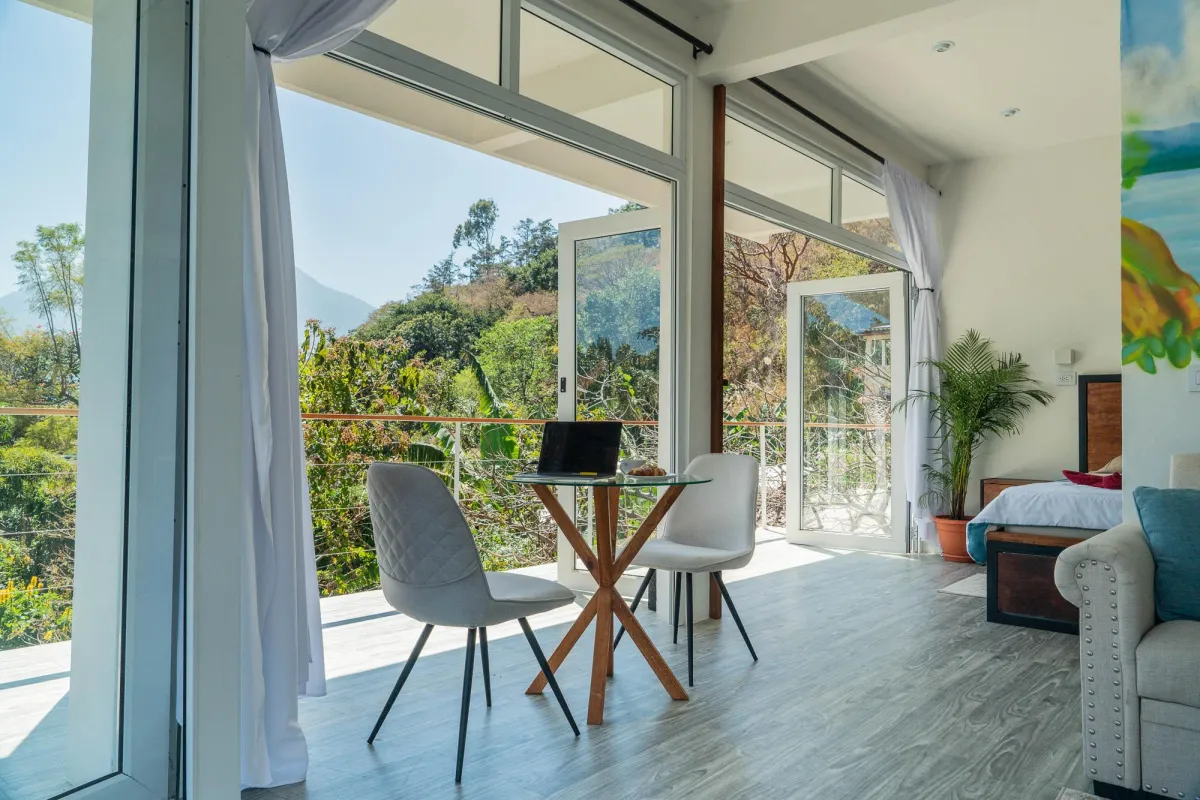
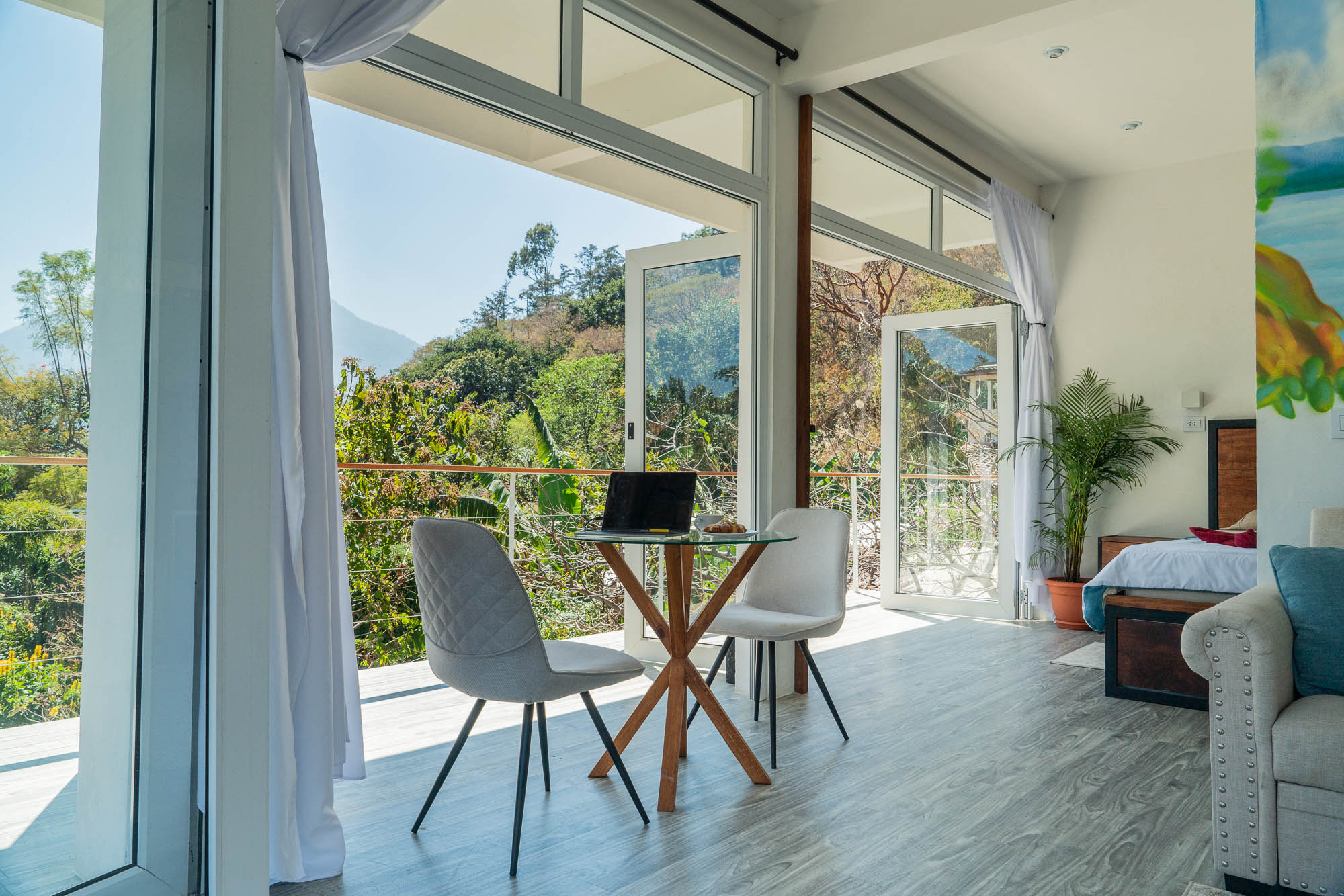
Not all “wifi” is equal. Before committing to a place to work, ask specifically about fiber, typical speeds, and whether the connection handles video calls. Purpose-built coworking and all-inclusive setups are the safest bet. Sarnai, for example, provides fast fiber internet in both private units and a dedicated coworking space, exactly the reliability remote workers need. See the Sarnai nomad setup.
Always Have a Backup
Even with great wifi, smart nomads carry a backup. A local SIM or eSIM with a generous data plan lets you hotspot from your phone if the wifi falters, invaluable for important calls and deadlines. Guatemala’s main carriers offer affordable prepaid data, and coverage in the villages is generally decent. Test both your wifi and mobile data on arrival so you’re never caught off guard.
Timing and Habits That Help
Internet can be more congested in the evenings when more people are online. Many nomads do their heaviest uploads and most important calls in the morning, which also aligns with the lake’s calm, productive early hours. Scheduling demanding tasks early and lighter work later is a reliable strategy here.
Is It Good Enough to Work Full-Time?
For most remote workers, yes, with the right base. Writers, developers, designers, marketers, and consultants work successfully from San Marcos every day. If your job depends on flawless, high-bandwidth connectivity every single minute (say, live broadcasting), you’ll want to test carefully and lean on backups. For everyone else, the lake is very workable. For broader connectivity data by destination, Nomad List is a helpful cross-reference.
FAQ
Q: Is the wifi good enough to work remotely in San Marcos La Laguna?
A: For most remote workers, yes. Fiber is now available at coworking spaces and quality accommodations, supporting video calls and full workdays, just keep a mobile-data backup.
Q: Should I get a local SIM card in Guatemala?
A: Yes. A local SIM or eSIM with data is an essential backup for hotspotting and staying connected if wifi drops, and it’s affordable with decent village coverage.
Q: When is the internet fastest at the lake?
A: Often in the mornings, before evening congestion. Many nomads schedule heavy uploads and important calls early, which also suits the lake’s calm, productive hours.
Stay Connected, Work Confidently
San Marcos has grown into a genuinely viable remote-work base, fiber where it counts, plus easy mobile backups. Choose a reliable setup and you can work with confidence and a lake view. Explore the all-inclusive Sarnai nomad retreat.
