Working Remotely From Guatemala: Time Zones Made Simple
Working Remotely From Guatemala: Time Zones Made Simple
Guatemala runs on Central Standard Time (CST, UTC−6) year-round with no daylight saving, making it one of the most convenient bases for remote workers collaborating with North American teams. If your colleagues or clients are in the US, the time zone alignment is a major, underrated advantage. Here’s how it works.
Time zones can make or break remote work. Guatemala’s happens to be ideal for a huge slice of the global remote workforce. Here’s the simple breakdown.
Guatemala’s Time Zone
Guatemala observes Central Standard Time (UTC−6) all year, and crucially, it does not change clocks for daylight saving time. That means the offset to other places stays simple and stable for half the year, and shifts predictably when North American regions spring forward or fall back.
Alignment With the US and Canada
This is the big win. For most of the year, Guatemala is the same time as US Central Time, one hour behind Eastern, and one to two hours ahead of US Pacific (the exact gap shifts with US daylight saving). In practice, that means a workday in San Marcos lines up beautifully with North American business hours, no waking at 3 a.m. for meetings, no working until midnight. You can collaborate in real time and still enjoy your mornings and evenings.
Why This Matters for Nomads
Many popular nomad destinations (Bali, Thailand, parts of Europe) put you 7–12+ hours out of sync with US teams, forcing brutal schedules or async-only work. Guatemala lets North American remote workers keep normal hours while living somewhere extraordinary. For anyone with US-based clients, colleagues, or customers, the lake offers the rare combination of paradise and practicality. To check current offsets anytime, a tool like timeanddate.com is handy.
Structuring Your Workday
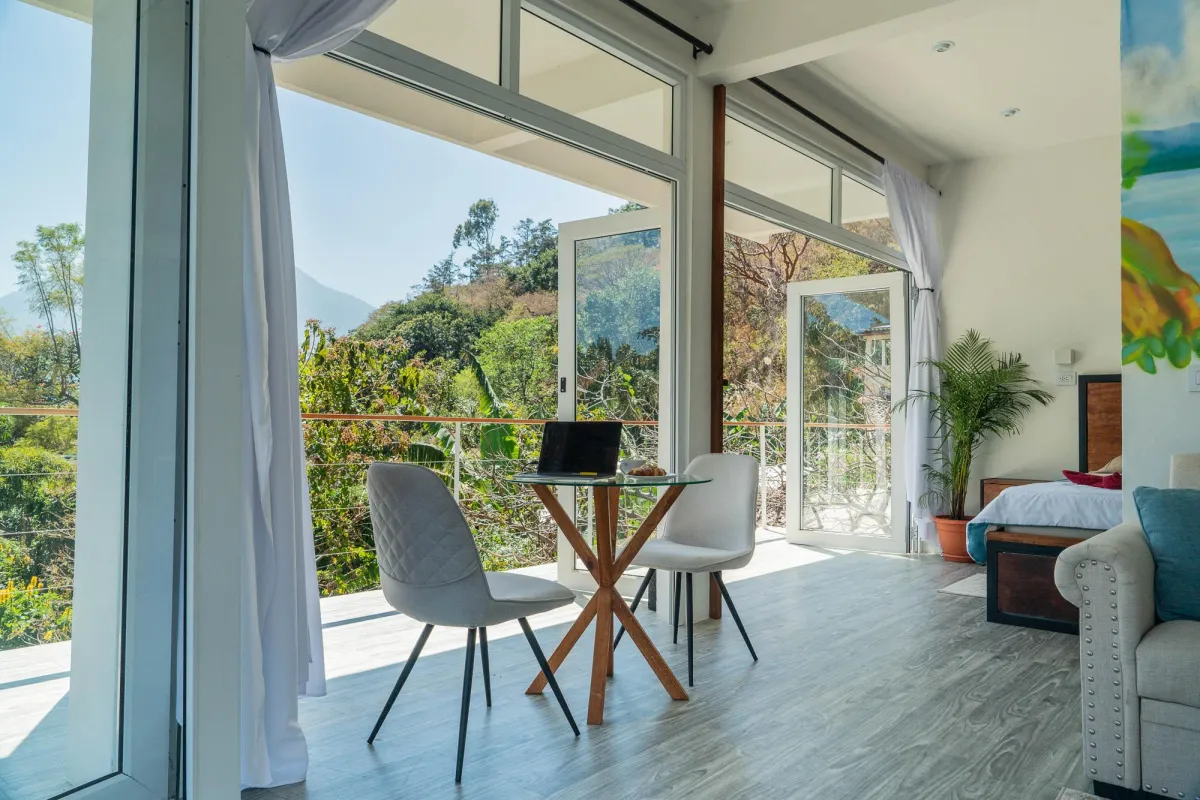
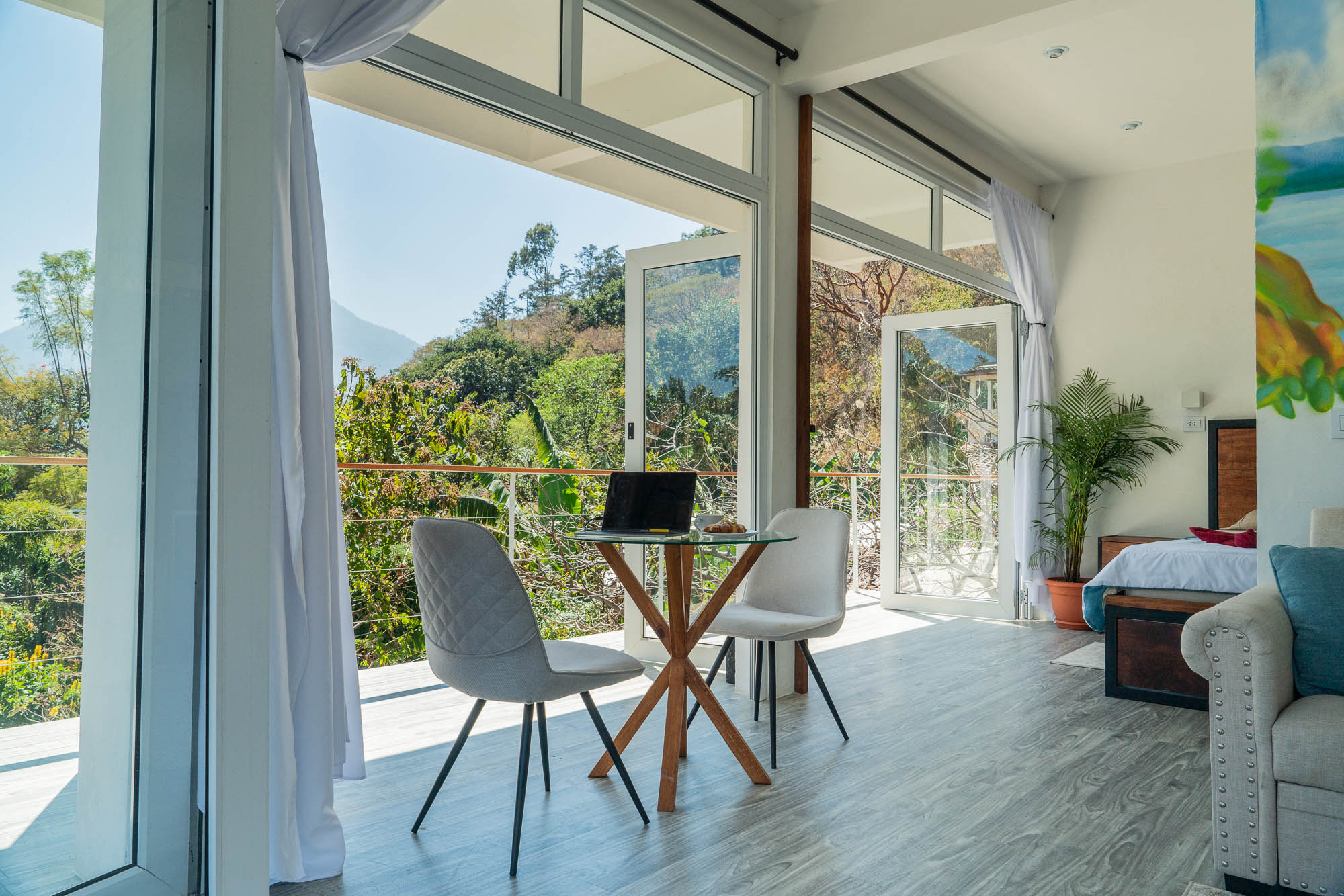
A common rhythm at the lake: rise early, enjoy a sunrise yoga class and a swim, do a few hours of focused deep work in the calm morning, then handle calls and collaboration as North American teammates come online. Because you’re in sync, you can finish at a normal hour and still have your evening. This alignment is part of why the lake works so well as a base. At Sarnai, fiber coworking plus the convenient time zone make collaborating with US teams seamless. See the Sarnai remote-work setup.
A Note for European Workers
If your team is in Europe, the offset is larger (Guatemala is roughly 6–8 hours behind Central European Time), so you’ll likely do mornings async and overlap with Europe in your afternoon. It’s very workable, especially with flexible or async-friendly roles, just structure your day around the overlap window.
FAQ
Q: What time zone is Guatemala in?
A: Central Standard Time (UTC−6) year-round, with no daylight saving time, making the offset to other regions simple and stable for much of the year.
Q: Is Guatemala good for remote work with US teams?
A: Excellent. It’s the same time as US Central for most of the year, just an hour behind Eastern, so you can keep normal hours and collaborate in real time with North America.
Q: How does the time difference work for European remote teams?
A: Guatemala is roughly 6–8 hours behind Central European Time, so European workers typically handle mornings async and overlap with colleagues in their afternoon.
Paradise on Your Schedule
For North American remote workers especially, Guatemala offers something rare, a stunning, affordable base that keeps you perfectly in sync with your team. Work normal hours, live an extraordinary life. Explore the all-inclusive Sarnai retreat.
