Ayurveda for Beginners: How to Find Your Dosha and Stay Balanced While Traveling
The short answer
Ayurveda is India's traditional system of medicine, based on the idea that health comes from balancing three energies, or doshas: vata (air and space), pitta (fire and water) and kapha (earth and water). Most people have one or two dominant doshas. Travel tends to aggravate vata, so routines, warm food and rest help you feel grounded on the road.
Ayurveda has been practiced for thousands of years and is enjoying a revival among yogis, travelers and anyone looking for a gentler way to care for themselves. Here is a simple, practical introduction.
What Is Ayurveda?
Ayurveda translates as "the science of life." It looks at the whole person, including diet, sleep, movement, emotions and environment, and aims to keep the body in balance rather than only treating symptoms. It is considered a complementary practice in most Western countries. For an evidence-based overview, see the NCCIH page on Ayurvedic medicine. Always speak with your doctor before using herbal products or changing treatment.
The Three Doshas Explained

How to Find Your Dosha
A practitioner can assess you properly, but you can start by noticing patterns:
- Mostly vata: slim frame, quick mind, cold hands, variable appetite, light sleep.
- Mostly pitta: medium build, strong appetite, runs warm, driven and organized.
- Mostly kapha: solid build, steady energy, deep sleep, calm and patient.
Many people are a mix, such as vata-pitta. Notice which description fits you most of your life, not just today.
Why Travel Throws You Off Balance
Flights, time zones, irregular meals and constant movement all increase vata. That is why travelers often feel spacey, constipated, anxious or exhausted after a long trip. The answer is the opposite qualities: warmth, routine, oil, rest and grounding food.
Simple Ayurvedic Rituals for Travelers
- Wake and sleep at regular times. Routine is the number one vata balancer.
- Drink warm water first thing in the morning.
- Eat warm, cooked meals like soups, stews, rice and beans, which are easy to find in Guatemala.
- Try abhyanga, a warm oil self-massage before showering.
- Move gently every day. A morning yoga class is perfect.
- Spend time in nature. Sitting by water calms pitta, walking uphill wakes up kapha.
- Breathe slowly. Alternate nostril breathing helps all three doshas.
Ayurveda at Lake Atitlán
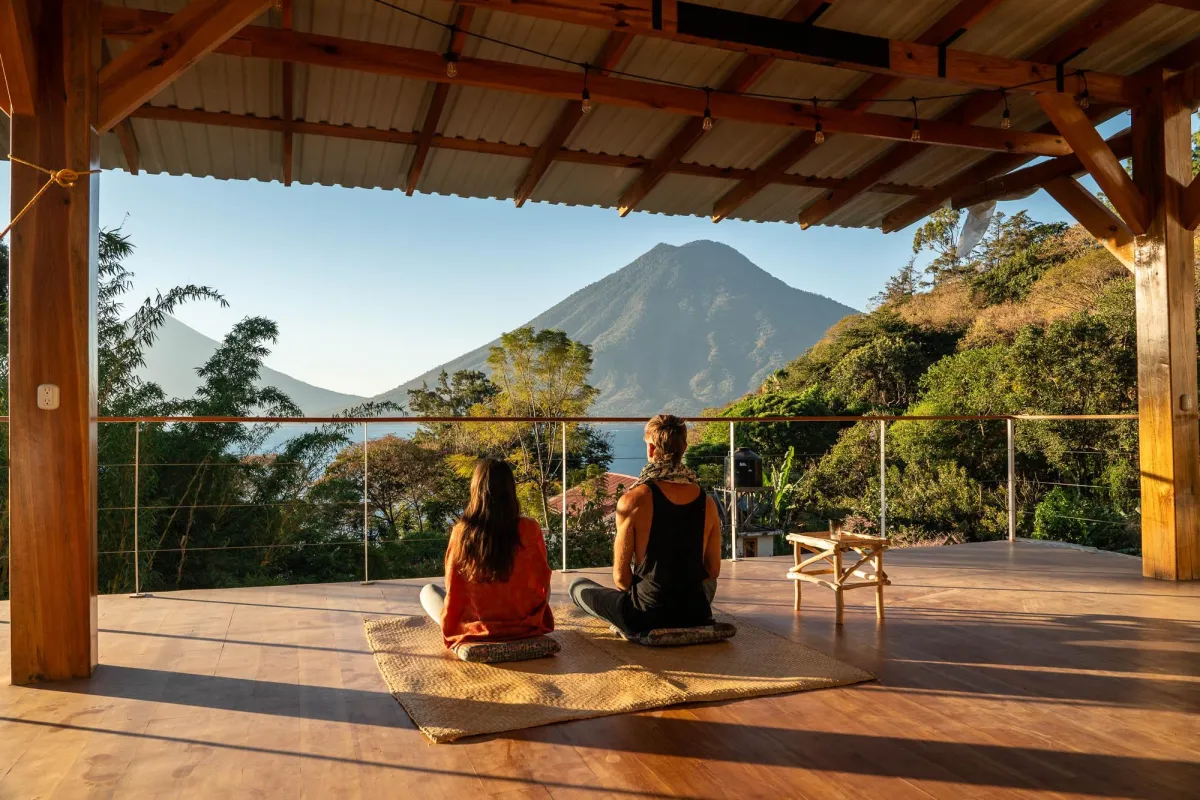
The rhythm of San Marcos La Laguna naturally supports balance: early mornings, simple plant-based food, warm days, cool nights and lots of time outdoors. Pair your trip with daily rooftop yoga at Sarnai, a massage from our services menu, and a slower pace. If you want to go deeper, our guide to holistic health in San Marcos covers local practitioners and therapies.
Keep reading
Frequently Asked Questions
What are the three doshas in Ayurveda?
The three doshas are vata (air and space), pitta (fire and water) and kapha (earth and water). Everyone has all three, usually with one or two dominant.
Which dosha is affected most by travel?
Vata. Travel is fast, dry, irregular and full of movement, which are vata qualities. Routine, warm food, oil massage and rest help rebalance it.
Is Ayurveda scientifically proven?
Some Ayurvedic practices, like yoga and meditation, have research support, but many herbal remedies have not been well studied. Treat Ayurveda as complementary and consult a doctor before taking supplements.
Find Your Balance by the Lake
Ayurveda is not about perfection. It is about noticing what you need and choosing what brings you back to center. For a stay built around yoga, fresh plant-based food and quiet mornings, book your retreat-style stay at Sarnai.
Check availability and bookLast updated November 20, 2026. Written by the Sarnai team in San Marcos La Laguna, Lake Atitlán, Guatemala.
